Table of Contents
Jump straight into our detailed outfit, fabric, and footwear breakdowns for Navratri 2026:
1. Navratri Fashion vs 5-Hour Dance Stamina
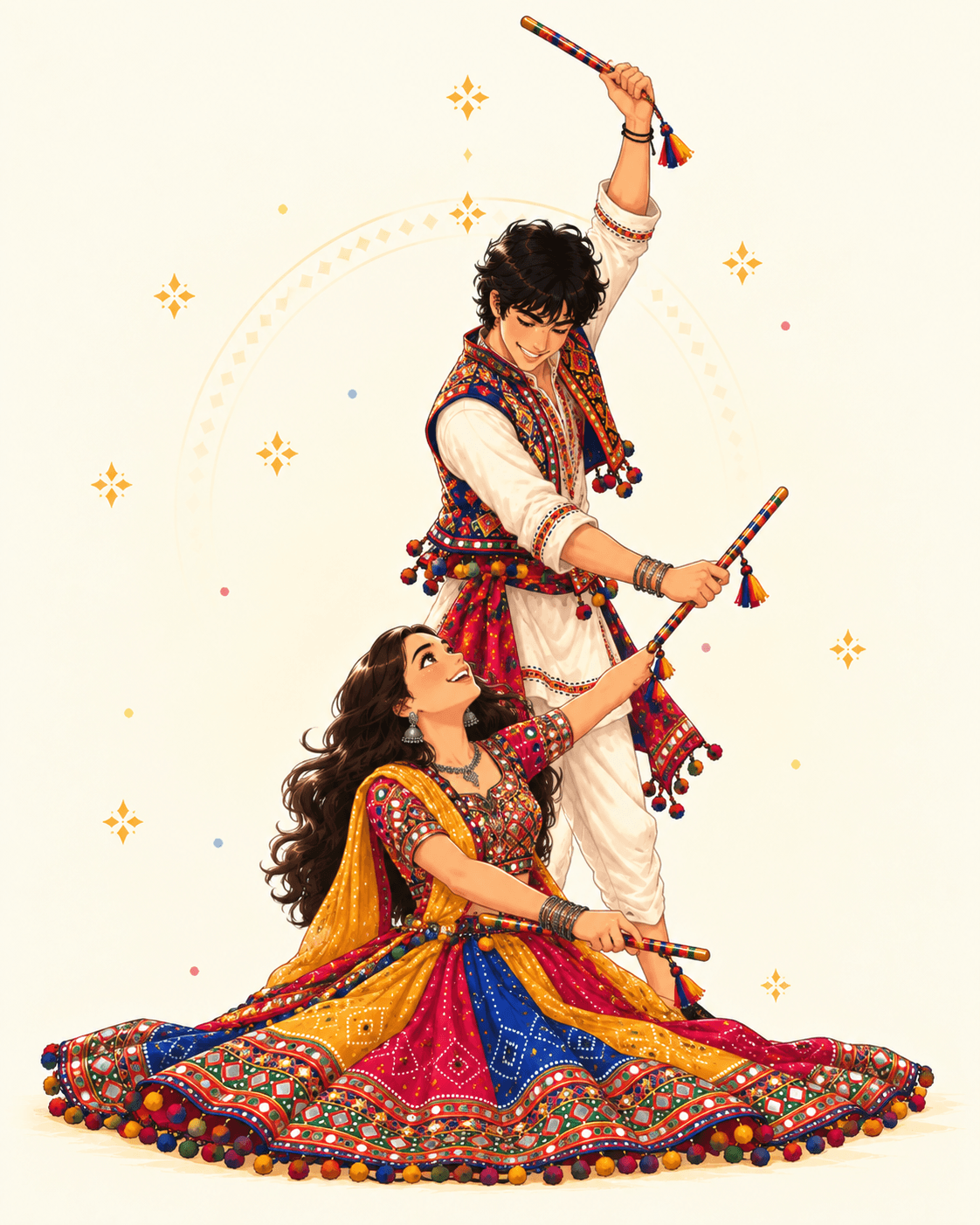
Step onto any major festival ground in Gujarat or Mumbai between 9:00 PM and 2:00 AM, and you are immediately enveloped by a dazzling sea of twinkling mirrors, swirling jewel tones, and thunderous dhol beats. Navratri is undeniably India's most visually magnificent folk celebration.
However, beneath the fairy lights lies a rigorous physical reality: Garba is an intensive endurance sport. A dedicated dancer covers anywhere from 15,000 to 28,000 steps in a single evening, sustaining heart rates between 130 and 165 BPM during rapid Dodhiya and Tran-Taali sequences. Outdoor venue temperatures in western India regularly hover between 26°C and 32°C with high festival humidity.
- Stiff synthetic cancan underskirts that trap body heat and bruise hips.
- Slippery georgette dupattas pinned with weak safety pins that snap mid-twirl.
- Brand-new, unpadded leather mojris that cause deep heel blisters by Night 2.
- Heavy metallic earrings that painfully tear earlobes during centrifugal spins.
- Pure cambric, mulmul, or handloom cotton skirts with a wide, flowing ghera.
- Invisible 3-point anchored dupatta draping that never shifts during 360° rotations.
- Pre-broken-in footwear equipped with silicone arch cups or cushioned insoles.
- Featherweight oxidized metal or thread jewelry reinforced with earlobe lift tape.
When pairing up through GarbaMatch or dancing with lifelong friends, coordinating an outfit that balances authentic cultural grandeur with supreme mobility ensures you finish Night 9 as energized as you began Night 1.
2. Traditional Garba Outfits: History & Cultural Craft
Traditional Garba attire is not mere festival costuming—it represents centuries of living craftsmanship from artisan communities across Saurashtra, Kutch, and North Gujarat. Understanding these craft techniques helps you appreciate the textile art you wear and distinguish authentic artisan pieces from mass-manufactured synthetics:
Kutch Embroidery (Rabari, Ahir & Mutwa Work)
Originating from semi-nomadic pastoral communities of Kutch, these embroideries feature intricate chain stitches, herringbone patterns, and vibrant silk or cotton threads. Ahir work frequently depicts peacocks, parrots, and sacred flora, while Rabari embroidery is renowned for bold square-chain borders and reflective glass inserts.
Gamthi & Applique Patchwork
Gamthi (literally “of the village”) represents rustic Saurashtrian folk styling. Characterized by geometric fabric patches, contrasting running stitches, colorful pom-poms (tassels), and bold borders, Gamthi attire has a raw, earthy aesthetic that looks phenomenal in high-energy ground spins.
Bandhani & Leheriya (Tie-Dye Masterpieces)
Crafted by master artisans in Jamnagar, Bhuj, and Rajkot, authentic Bandhani involves plucking thousands of tiny fabric points with fingernails and tying them with thread before dyeing. The resulting dot motifs (Shikari, Ekdali, Boond) create lightweight, feather-soft dupattas that billow like colored clouds during rotation.
Patola Prints & Weaves
Inspired by the revered double-ikat silks of Patan, contemporary Garba skirts incorporate Patola-inspired motifs—such as Nari-Kunjar (women and elephants), Paan Bhat (betel leaf), and Navratna gems. Printed on lightweight cotton, these patterns bestow royal heritage without the stifling weight of heavy silk.
Abhala (Real Glass Mirror Work)
In folk tradition, convex mica and glass mirrors (*abhala*) were sewn onto garments to deflect malevolent energies and evil eyes. Today, they create the iconic kaleidoscope shimmer as hundreds of dancers rotate under stadium lighting. Opt for rounded, hand-stitched mirrors with smooth casings to avoid catching on clothing fibers.
| Craft Heritage | Origin Hub | Average Weight | Breathability | Best For |
|---|---|---|---|---|
| Pure Cotton Bandhani | Jamnagar / Bhuj | Ultra-light (300-500g) | Exceptional (10/10) | Dupattas, breezy Chaniyas |
| Gamthi Work Cotton | Saurashtra / Rajkot | Medium (900-1400g) | High (8.5/10) | High-tempo Dodhiya circles |
| Kutch Mirror Work | Bhuj / Mandvi | Medium-Heavy (1.5-2.2kg) | Moderate (7/10) | Auspicious Nights 7, 8 & 9 |
| Heavy Bridal Silk/Cancan | Commercial Retail | Very Heavy (3.5kg+) | Poor (3/10) | Photo sessions only (Avoid for dancing) |
3. The Complete Chaniya Choli Guide: Flare, Cuts & Draping
The classic Gujarati Chaniya Choli consists of three harmonious pieces: the flared skirt (*Chaniya* or *Ghagra*), the fitted cropped blouse (*Choli*), and the billowing veil (*Dupatta* or *Odheni*). Mastering each piece guarantees effortless grace during rapid turns:
Flared Volume Without the Cancan Trap
The visual spectacle of Garba depends on the *ghera* (the circumferential circumference of the skirt hem). A proper Garba skirt features a 6-meter to 10-meter flare (often constructed with 24 to 48 vertical *kalis* or flared panels). When you pivot, this volume opens outward into a stunning disc.
What to Choose:
Lightweight cambric cotton or pure mulmul with micro-pleated kalis. It billows gracefully with natural airflow and moves like liquid silk.
What to Avoid:
Dense plastic bridal cancan mesh. Cancan adds 2+ kilograms of weight, restricts foot lunges, scrapes skin, and turns your skirt into a sauna.
Arm Mobility & Sweat-Proof Linings
Garba involves continuous overhead claps, high-reaching stick strikes, and dynamic lateral bends. A poorly tailored blouse will ride up, dig into armpits, or tear along back seams:
- Back-tie dori closures: Adjustable back strings allow you to tighten or loosen the bust fit as your body warms up through the night.
- Gusseted armholes: Ensure your tailor cuts deep armholes with slight ease to prevent friction during overhead claps.
- Pre-washed cotton lining: Ensure the inner lining is pure breathable cotton; synthetic polyester linings will cause itching and heat rash within two hours.
3 Dupatta Draping Styles That Won't Unravel During Spins
Classic Seedha Pallu
Draped over the right shoulder with the front pleats fanning across the chest. Anchor the shoulder pleats with two pins from underneath, and pin the top left corner securely to your left waistline.
The Double-Shoulder Anchor
Pleat the dupatta neatly and pin it across both left and right shoulders in a cowl shape across the front. Both hands remain 100% free for unrestricted Dandiya clashes and fast claps.
The Kamarbandh Lock
Drape the dupatta diagonally across the torso and secure it firmly at the waist with an embroidered fabric belt or metallic waist chain. It holds the fabric tight to your core, eliminating any flapping.
4. Men's Garba Outfits: Kediyu, Kafni Pants & Modern Kurtas
Men's festive fashion at Navratri is one of India's most dynamic and culturally expressive traditions. From regal Kutch Kediyus to sleek minimalist Kurtas, here is how men can dance with authentic confidence:
The Flared Kediyu & Kafni Pants
The *Kediyu* is a short, pleated frock-tunic that flares out dramatically from a high-waisted embroidered yoke. Historically worn by pastoral cowherds (*Maldharis*) of Saurashtra, it features hundreds of micro-pleats that expand outward like an umbrella during Dodhiya turns.
Pair it with Kafni pants—billowy, drop-crotch harem-style trousers that gather snugly at the calves and ankles. Kafnis provide absolute freedom for deep lunges and rapid high kicks without restriction.
The Kurta-Churidar with Gamthi Koti
For dancers who prefer a sleeker silhouette or who dance in warm indoor arenas, a solid knee-length 100% cotton or slub-linen Kurta paired with Churidar or tapered Aligarhi trousers is universally flattering.
Transform the look instantly into festive high-energy by layering a sleeveless Gamthi or Kutch embroidered Nehru jacket (Koti). The structured jacket adds regal folk presence while allowing cool airflow through the unlined kurta sleeves.
The Dhoti Secret for Men
If you choose to wear a traditional pleated unstitched *Dhoti*, wear comfortable fitted athletic compression shorts underneath. Secure the waistband knot with a hidden safety pin or woven fabric sash. This provides absolute peace of mind so you can jump, spin, and clap without adjusting your drape every three songs.
5. Comfortable Footwear Guide: The Deciding Factor
Ask any seasoned festival veteran: your footwear will either make or break your Navratri. Nothing cuts an evening short faster than bleeding heel friction or bruised metatarsals. Here is how to navigate the most critical element of your ensemble:
Avoid Dangerous Smooth Leather or Plastic Soles
Many cheap store-bought Mojris feature glazed hard plastic or untreated buff leather soles. When combined with fine soil or slippery synthetic ground carpeting, they offer zero traction during fast 3-Taali pivot stops. Look specifically for shoes with flexible textured rubber (TPR) outsoles or take them to a local cobbler to apply a thin rubber anti-skid grip.
The 14-Day Break-In Rule for Mojris & Juttis
Never wear brand-new ethnic shoes on Night 1 of Navratri. Authentic leather juttis mold to the shape of your feet over time. Wear them around your living room with thick athletic socks for 30 minutes every day for two weeks before the festival. Apply mustard oil or petroleum jelly to the inner heel counter to soften the stiff leather edges.
Barefoot Dancing: Cultural Tradition & Arch Care
In historic *Sheri* (lane) Garbas and devotional temple circles, dancing barefoot is customary to honor Mother Amba and the Garbi shrine. If dancing barefoot, inspect the ground beforehand for sharp pebbles. Apply adhesive sports tape around the balls of your feet and arches to provide subtle shock absorption while maintaining sacred earth contact.
The Sneaker Revolution
Modern dancers who attend all nine nights increasingly wear cushioned white minimalist trainers or slip-on memory foam sneakers. Tucked underneath a flowing 10-meter chaniya or paired with casual dhoti pants, you get the joint-cushioning of a marathon shoe without compromising your festive presence.
6. Accessories & Jewelry: Glamour Without the Pain
Nothing elevates traditional attire like authentic oxidized German silver, antique brass, and tribal thread ornaments. However, swinging metal jewelry during high-speed dance spins can become painful or hazardous if not chosen wisely:
Earrings & Jhumkas
Centrifugal force multiplies the weight of heavy earrings when spinning. Avoid dense solid metal jhumkas. Instead, choose hollow filigree pieces, stamped silver foil designs, or fabric-backed mirror work earrings. Always apply medical ear-support tape on the back of your lobes to eliminate tearing risks.
Kadas & Bangles
Skip fragile glass bangles entirely—they will shatter upon high-impact Dandiya strikes and cut dancers. Choose sturdy bell-metal, brass, or carved wooden *Kadas* with smooth rounded edges that jingle harmoniously with every clap.
Chokers & Haslis
Rigid metal neck chokers can dig painfully into your clavicle when you dip your chin during Dodhiya steps. Select flexible multi-strand oxidized chains, woven thread necklaces, or padded fabric chokers that rest gently against the skin.
Safety Pin Protocol
Always use heavy-duty pearled safety pins or locking safety pins. Never leave an open pin clasp exposed where it can scratch a partner during tight circle passes. Fasten all pins from the interior side of the garment facing inward.
7. Weather & Breathability: Surviving Festival Heat
When ten thousand dancers assemble under powerful floodlights, the ground creates its own humid micro-climate. Synthetic fibers such as polyester, nylon, and dense art-silk do not breathe; they trap perspiration against your skin, leading to dehydration, chafing, and rapid stamina collapse.
The Natural Fiber Ranking for Navratri
Prioritize anti-chafing thigh bands or lightweight cycling shorts under your skirt or dhoti. The combination of salt sweat and constant friction will cause raw chafing by Night 3 if your inner thighs are not shielded.
8. The 3-Minute Pre-Ground Home Spin Test
Before you step out your front door or hail a cab to the festival arena, perform this strict 3-minute ergonomic checklist in your living room. Catching a wardrobe flaw at home takes thirty seconds to fix; discovering it in the middle of a 200-person moving circle is an absolute nightmare:
The 10-Continuous-Twirl Spin Test
Perform 10 rapid clockwise and counter-clockwise 360-degree spins in full attire. Does your dupatta whip into your eyes? Does your skirt drawstring slip down your hips? Do heavy earrings pull on your lobes? If anything moves out of position, reinforce the safety pin anchors immediately.
The High-Reach Overhead Clap Test
Clap your hands vigorously above your head five times, as you will during Tran-Taali. Does your choli or kedia ride up awkwardly? Do armhole seams dig into your skin? Ensure you have 100% arm elevation freedom without restriction.
The Deep Lunge & Pivot Step
Take a wide, low lunge forward and pivot sharply on the ball of your foot. Check your shoe sole grip on your home floor. Verify that your skirt hem rests exactly one to two inches above floor level so you never accidentally step on your own border.
9. Beginner Outfit Advice: Authentic Styling on a Budget
If Navratri 2026 is your first time attending or if you are visiting Gujarat for the festival, the prospect of arranging nine distinct ethnic outfits can feel overwhelming. You do not need an endless wardrobe budget to look magnificent:
1. Renting vs Buying
In every major festival city, traditional costume rental bazaars open 4 weeks before Navratri. Renting allows you to wear elaborate, museum-grade Kutch mirror-work pieces for weekend nights without committing to long-term dry cleaning or closet storage.
2. The 1-Neutral Foundation Rule
Invest in one premium solid black, deep indigo, or off-white flared cotton skirt. Pair it with three different vibrant bandhani dupattas and contrasting blouses across different festival nights. It looks like three completely distinct designer ensembles!
3. Layer with Jackets & Kolis
For men and women alike, a single versatile embroidered Gamthi vest or short jacket turns any plain solid kurta or crop top into an eye-catching, dance-ground-approved statement.
Looking for more beginner guidance? Read our comprehensive breakdown on Garba for Beginners: Master the Basic Steps & Ground Confidence, and ensure you master circular dance manners with our guide to Garba Etiquette: 15 Things to Know Before Navratri.
Navratri Attire & Styling Questions
Everything you need to know about dressing comfortably and authentically for nine nights of dance.
Explore More Navratri 2026 Guides
Navratri 2026 Guide
Complete calendar, auspicious colors for 9 nights, and top grounds.
Garba Etiquette Guide
15 essential floor rules for joining circles, dandiya safety, and respecting the rhythm.
Find Your Garba Partner
Connect with passionate dancers by city, festival nights, and dance skill level.