
Navratri 2026: Garba & Dandiya Guide
Welcome to your definitive guide to Sharad Navratri 2026. From verified festival calendar dates and sacred 9-day colors to the origins of Garba and Dandiya Raas, beginner footwork tips, Chaniya Choli styling, and how to find your ideal dance partner on GarbaMatch—everything you need for an unforgettable celebration is right here.
Night 1 · Oct 11, 2026 · 7 PM IST
Ghatasthapana
Sunday, Oct 11, 2026
Vijayadashami
Tuesday, Oct 20, 2026
Essential Facts: Navratri 2026, Traditions & Dance Partners
Sharad Navratri 2026 is one of India's most celebrated festive seasons, combining nine sacred nights of devotion with high-energy folk dancing. Below are direct, factual answers to the most common questions regarding festival dates, dance styles, and finding dance partners on GarbaMatch.
When is Navratri 2026?
Sharad Navratri 2026 begins on Sunday, October 11, 2026 (Pratipada / Ghatasthapana) and concludes on Monday, October 19, 2026 (Maha Navami), with Vijayadashami (Dussehra) celebrated on Tuesday, October 20, 2026.
What is Navratri?
Navratri is a nine-night Hindu festival celebrating the divine feminine and the nine manifestations of Goddess Durga (Navadurga). It signifies the triumph of righteousness and inner strength over darkness, observed with fasting, evening prayers, and joyous community dancing.
What is Garba?
Garba is a devotional folk dance originating in Gujarat, performed in concentric circles around an illuminated earthen lamp (Garbha Deep) or an altar of the Goddess. Dancers move counter-clockwise with synchronized clapping, footwork, and swirling spins to rhythmic folk songs.
What is Dandiya?
Dandiya (Dandiya Raas) is an energetic stick dance performed in facing pairs or rotating rows. Dancers strike colorful wooden or fiberglass sticks together in rhythm, representing the legendary battle of Goddess Durga against the demon Mahishasura.
How can I find a Garba partner for Navratri 2026?
You can find a Garba partner by joining the GarbaMatch waitlist. The platform is designed to connect dancers by city, skill level (from beginner 2-Taali to Dodhiya), and festival night plans across centers like Ahmedabad and Vadodara.
How can I find a Dandiya partner for Navratri 2026?
Because Dandiya Raas requires a facing partner with matched rhythm, you can find a Dandiya partner through GarbaMatch. Dancers can register their city, festival night schedule, and stick tempos to coordinate before festival nights begin in cities such as Mumbai and Surat.
Navratri 2026 Dates & Festival Calendar
In 2026, Sharad Navratri commences on the auspicious Shukla Paksha Pratipada of the Hindu month of Ashwin. The festival spans nine sacred nights of divine music, devotion, and folk dance across India and the diaspora.
Ghatasthapana
Sunday, October 11, 2026
Pratipada marks the sacred Kalash Sthapana and invocation of Maa Shailaputri. Grounds across Ahmedabad, Vadodara, and Mumbai light up for Night 1.
Maha Navami
Monday, October 19, 2026
Dedicated to Maa Siddhidatri, fulfilling spiritual attainments. Dancers celebrate the finale of the nine nights with high-cadence Dodhiya and non-stop raas.
Vijayadashami (Dussehra)
Tuesday, October 20, 2026
Triumph of Lord Rama over Ravana and Maa Durga over Mahishasura. Celebrated with morning Jalebi-Fafda traditions and evening Ravana Dahan effigies.
Complete Day-by-Day Navratri 2026 Schedule
Tithis, Navadurga Forms, Daily Auspicious Colors, and Festival Milestones
What Is Garba?
Garba is a traditional folk dance rooted in the cultural soil of Gujarat, India. The word traces back directly to the Sanskrit term "Garbha", translating to womb.
In antiquity, Garba was centered around a perforated earthen pot known as the Garbha Deep. Inside the pot rests a single burning oil wick (diya), representing the divine spark of life gestating within the cosmic womb. The dancers move in concentric circles around this flame or an image of Goddess Jagadamba, reminding every participant that all transient human life revolves around an immortal, unchanging divine core.
Unlike linear social dances, Garba moves in continuous counterclockwise rings. As the rhythm of the double-headed dhol quickens, dancers weave intricate hand claps—the iconic 2-Taali (Be-Taali), 3-Taali (Tran-Taali), and graceful Dodhiya steps—twirling and dipping in unified rhythm.
The Symbolism of the Circle
- The Cosmic Wheel (Samsara): The revolving circle mirrors the perpetual cycle of birth, life, death, and rebirth.
- The Unmoving Center: While the dancers spin continually, the sacred flame at the epicenter remains still, symbolizing the timeless Divine.
- Ego Dissolution: In a circle of thousands, no dancer stands above another. Everyone synchronizes to the shared beat of the dholida.
The Anatomy of a Dandiya Clash
- The Polished Wood: Traditionally turned from seasoned teak, shisham, or lightweight bamboo, wrapped in colorful bandhej threads.
- The Sword Dance: Every synchronized strike represents the clash of celestial weapons in Durga's victorious battle.
- The Partner Weave: Dancers take steps, strike in 4 or 8 counts, and fluidly transition to face a new partner down the aisle.
What Is Dandiya?
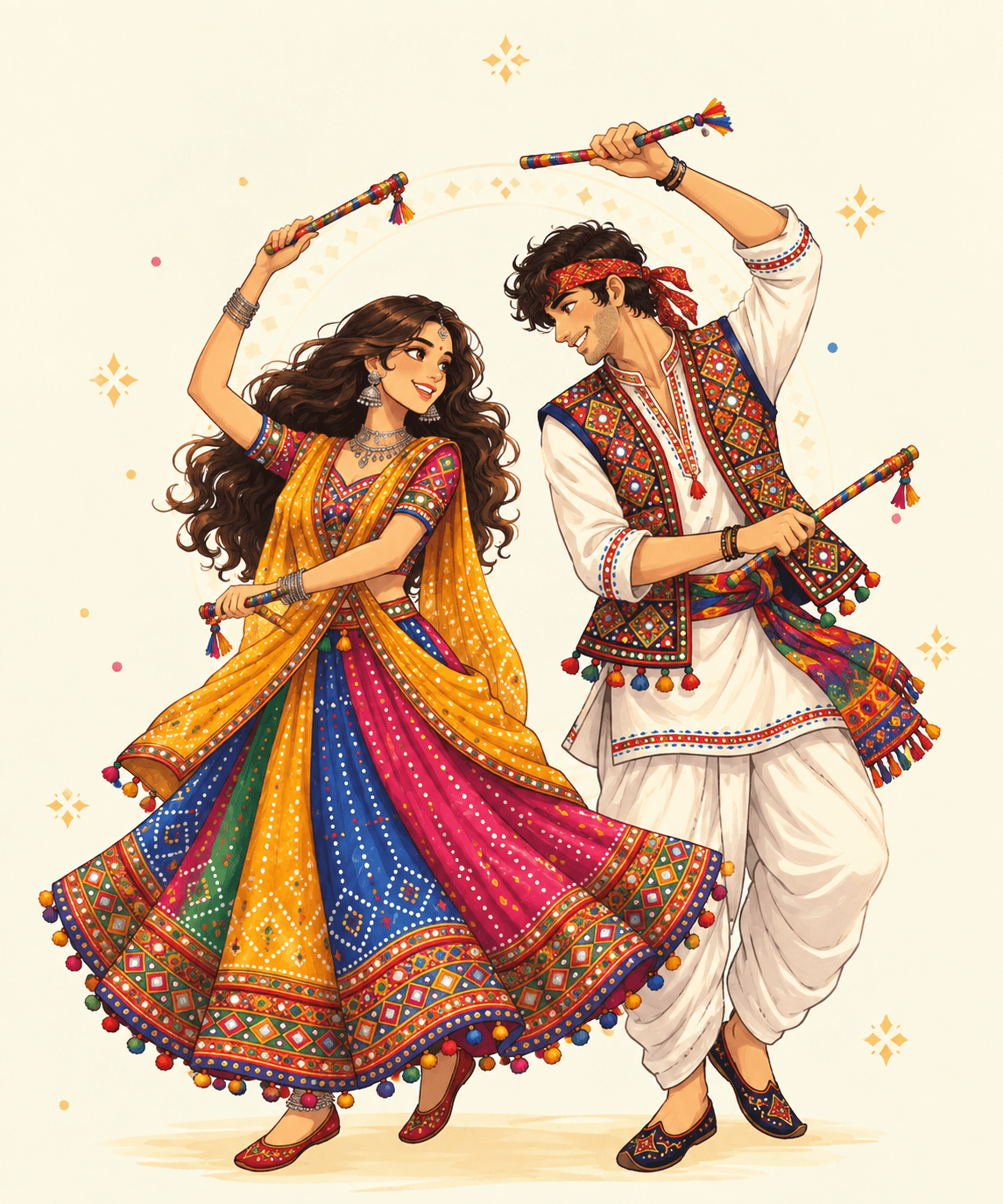
Dandiya Raas (often simply called Dandiya) is the high-energy, rhythmic partner dance performed with a pair of slender, decorative wooden sticks held in each hand. While Garba is circular and hand-clapped, Dandiya is structured around interactive partner clashes.
Historically linked to the pastoral folklore of Lord Krishna and the Gopis in Vrindavan, Dandiya took on heroic resonance in Gujarat as a stylized reenactment of the epic confrontation between Goddess Durga and the demon Mahishasura. The resonant, percussive "clack-clack" of the wooden sticks echoing in unison mimics the ringing of swords in righteous combat.
Dancers arrange themselves in two facing parallel rows or concentric rotating rings. Moving to rhythmic counts of 4, 8, or 12, each dancer strikes their partner's sticks in coordination before taking a sidestep to meet the next dancer. Because it is an inherently paired dance, having an agile, attentive partner is essential.
Garba vs Dandiya: The Key Differences
While both dances are celebrated together throughout the nine nights of Navratri, their spiritual origins, physical props, movement geometries, and partner requirements are distinctly unique.
How a Typical Navratri Night Unfolds: The evening opens with the sacred Maha Aarti around 8:00 PM, followed immediately by slow, devotional traditional Garba circles. By 10:30 PM, the energy accelerates into fast Dodhiya rounds, transitioning seamlessly into high-tempo Dandiya Raas pairs and climactic Sanedo chants that carry on past midnight.
How to Prepare for Your First Garba Night
Navratri is a test of athletic stamina disguised as a dance festival. Here is your chronological prep plan to ensure you hit Night 1 with energy, comfort, and confidence.
Cardio & Footwork Basics
- Build stamina: 20–30 minutes of daily brisk walking, jump rope, or light jogging to condition your calves for hours of spinning.
- Learn the 2-Taali: Practice the simple right-foot step-clap, left-foot back-clap rhythm in your living room to build muscle memory.
- Order ethnic wear: Alter chaniyas and kedias early to avoid the dreaded last-minute tailor rush.
Passes & Footwear Break-in
- Break in your mojris: Wear your juttis or dance shoes with thick socks around home to prevent severe heel blisters on Night 1.
- Confirm event tickets: Secure your entry QR codes or physical RFID wristbands for club grounds like Karnavati, Shankus, or Dome.
- Sync with your partner: Align on matching color accents and designate an exact entrance gate meeting spot.
Hydration & Early Arrival
- Fuel smartly: Eat an energy-rich, easily digestible meal (banana, oats, or khichdi) 2 hours before dancing. Avoid heavy fried food.
- Emergency safety kit: Pack extra safety pins, band-aids, hair ties, blister tape, and a pocket pack of electrolyte hydration salts.
- Beat the traffic: Major venues experience massive gridlock after 8:30 PM. Arrive by 7:30 PM to park and enter stress-free.
How to Find a Garba or Dandiya Partner
Dancing in Navratri is infinitely more joyful when you have someone who shares your energy, keeps your cadence, and shows up at the exact same arena. Yet finding a compatible partner is notoriously challenging:
- ✕The Odd-Numbered Group: Being the 5th or 7th person in a friend group leaves you stuck rotating out during paired Dandiya lines.
- ✕Rhythm Tempo Disconnect: Dancing with someone whose speed is completely out of sync leads to awkward steps and frustrated spins.
- ✕Pass Misalignment: You hold tickets for Karnavati Club, while your acquaintances only have passes for GMDC or Shankus.
Choose Your Dedicated Match Channel
Whether you live for Dodhiya circles or need a coordinated stick partner for fast-paced Dandiya Raas, GarbaMatch is being built with dedicated options:
Garba Tips for Beginners
Feeling intimidated by massive concentric rings of spinning pros? Follow these golden rules to dance gracefully on your very first evening.
Master 2-Taali First
Do not attempt complex 12-count Dodhiya on Day 1. Stick to the basic two-clap rhythm: step right and clap, step back left and clap. It accounts for 60% of all traditional music.
Stick to Outer Circles
Concentric circles operate on speed tiers: the inner circles move with blistering velocity, while the outer rings have a relaxed pace, generous spacing, and patient dancers.
Listen to the Dhol, Not Your Feet
Looking down makes you dizzy and throws off your balance. Keep your eyes level, soft knees, and let the bass drop of the dhol dictate your foot taps automatically.
Never Freeze in the Ring
If you miss a beat or lose your footing, never come to an abrupt standstill—the momentum behind you is strong. Gently drift toward the outer edge to reset.
Light on the Balls of Your Feet
Garba requires agile rotational pivots. Dancing flat-footed on your heels strains your shins and leads to early fatigue. Keep your weight distributed forward.
Smile & Make Eye Contact
Garba is communal celebration, not an exam. Catching a partner’s eye and smiling naturally synchronizes your timing and creates an instant welcoming atmosphere.
What to Wear to Garba: Outfits & Footwear
Navratri fashion is vibrant, intricate, and deeply steeped in Gujarati craftsmanship. Here is what to look for when assembling your festive wardrobe.
Chaniya Choli & Dupatta
- The Flared Ghagra: Look for 8 to 12-meter flare skirts with real mirror work (Abhla), Gamthi thread embroidery, and cowrie shell borders that twirl dramatically.
- Gujarati Pleated Pallu: Drape the dupatta across the front in traditional pleated style, anchored securely with discreet safety pins at the shoulder and waist.
- Oxidized Silver: German silver chokers, jhumkas, bugadi ear clips, and layered bangles provide authentic shine without weighing you down.
Kedia & Chorno
- The Traditional Kedia: A pleated, flared peplum-style jacket top adorned with colorful embroidery, pom-poms, and mirror tassels.
- Chorno or Dhoti: Loose, breathable gathered pants that offer complete freedom of movement during deep crouches and spins.
- Contemporary Kurta Alternative: A short cotton kurta paired with an embroidered Kutchi waist-coat or Nehru jacket for sleek modern flair.
Mojris & Barefoot Tips
- Padded Leather Mojris: Ensure they have cushioned inner soles. Always insert silicone heel cups to absorb ground impact on asphalt and paving.
- Barefoot on Turf Grounds: Many dancers prefer dancing barefoot on manicured grass. Apply petroleum jelly or tape to toes prone to turf burn.
- Dance Sneakers: At massive stadium grounds where outfits hide footwear, minimalist dark sneakers with cushioned arch support are increasingly popular.
Garba & Dandiya Etiquette
Navratri is both an electrifying cultural celebration and a sacred spiritual observance. Keep these essential courtesies in mind on every ground.
The central altar or illuminated clay lamp represents Maa Amba. Never step directly through the inner sanctum, cut across the mandap cordons, or throw trash near the central aarti dias.
Garba circles always move in a counterclockwise progression. Walking clockwise against the natural flow causes immediate pile-ups and collisions during fast Dodhiya spins.
Dandiya is about rhythmic acoustic harmony, not brute force. Strike lightly and cleanly at the designated contact points. If your stick accidentally slips, apologize promptly with a smile.
Heavy chaniyas with mirror work and broad flare need an extra foot of clearance. Keep reasonable distance from fellow dancers to prevent snagged dupattas or stepped-on hemlines.
If an inexperienced dancer enters your circle, adjust your cadence slightly. Navratri's true spirit lies in hospitality and collective jubilation, not elitist choreography.
Every venue enforces strict zero-tolerance policies regarding harassment or inappropriate conduct. Keep your energy joyful, celebratory, and respectful of women dancers.
How GarbaMatch Helps You Find a Partner
GarbaMatch was built from the ground up to solve the real friction dancers experience every festival season. Here is how our platform is being designed to help connect you with the ideal companion:
City & Ground Sync
Tell us your grounds—such as GMDC, Karnavati, Shankus, Dome SVP, or United Way Baroda—to discover potential dance partners attending the same arenas when partner discovery opens.
Tempo Alignment
Declare your skill level: whether you want a patient guide for the 2-Taali rhythm or a fellow high-velocity Dodhiya pro who spins until dawn.
Women-First Safety
Designed with women-first conversation controls, clear privacy options, and 18+ community standards for fearless celebration.
Founding Perks
Early waitlist members receive free priority onboarding, city updates, and early access when partner discovery opens for Navratri 2026.
Frequently Asked Questions
Got questions about Navratri 2026 dates, Garba traditions, or finding your dance partner? Here are detailed answers to the most common queries.
Don't wait for the first beat of the dhol
Nine nights pass in the blink of an eye. Join the waitlist to find your dance partner, coordinate your festive outfits, and get ready to experience the true magic of Navratri 2026.